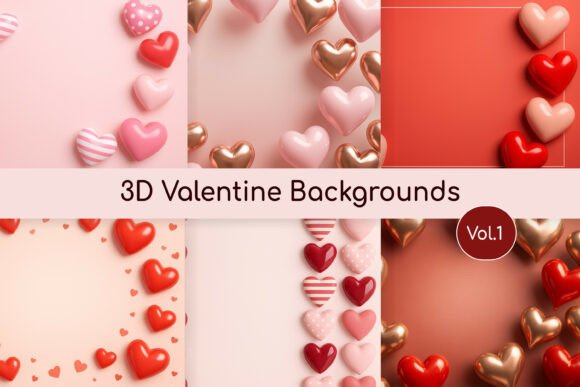
3D Minimal Valentine Background Vol.1: A Workflow Asset for Modern Designers
In the landscape of digital and print design, the efficiency of a creative workflow often depends on the quality of foundational assets available at the start of a project. 3D Minimal Valentine Background Vol.1 represents a strategic resource for professionals who need to execute high-quality visual campaigns without the time investment of rendering complex 3D scenes from scratch. This collection is not merely a set of decorative images; it is a structured toolkit designed to streamline the production process for social media managers, brand consultants, independent creators, and small business owners preparing for the Valentine's Day season.
The collection includes 30 high-resolution JPG files, each crafted with soft minimal compositions that balance aesthetic appeal with functional versatility. By integrating these backgrounds into your design pipeline, you can bypass the technical hurdles of 3D modeling while maintaining a premium, commercial-ready look. The following analysis explores how this specific asset pack fits into broader creative processes, from initial planning to final execution across various platforms.
Understanding the Asset Specifications and Technical Requirements
Before integrating any digital asset into a professional workflow, it is critical to understand its technical specifications to ensure compatibility with your existing tools and output requirements. 3D Minimal Valentine Background Vol.1 delivers files in a standard 5000 × 3333 px resolution with a 3:2 aspect ratio. This dimension is significant because it aligns with common print formats and provides ample pixel density for digital scaling. With a resolution of 300 DPI, these images are print-ready, meaning they can be used directly in physical products like greeting cards, invitations, or packaging mockups without risking pixelation or loss of detail.
The file format is JPG, which offers a universal compatibility advantage. Whether you are working within Adobe Creative Cloud, Canva, Figma, or other graphic design software, these files will import seamlessly. This universality reduces friction during the handoff phase between designers and clients or between different departments within an agency. The visual style focuses on 3D hearts, metallic accents, and blush tones, creating a cohesive palette that requires minimal color correction when overlaid with text or product imagery.
Strategic Integration into Pre-Production Planning
The value of 3D Minimal Valentine Background Vol.1 extends beyond the actual design phase; it plays a pivotal role in the pre-production planning stage. When mapping out a content calendar for February, marketers and brand strategists often struggle to visualize the final aesthetic before committing to copywriting or layout decisions. Having access to a library of 30 distinct but thematically consistent backgrounds allows teams to prototype concepts rapidly.
During the planning phase, you can use these backgrounds to create mood boards that communicate the intended brand voice to stakeholders. For instance, if a client is launching a limited-edition jewelry line for Valentine's Day, selecting three variations from the collection—one featuring prominent metallic accents and another focusing on soft blush tones—can help define the direction of the campaign. This early visualization prevents scope creep and ensures that all team members, from copywriters to photographers, are aligned on the visual identity before resources are allocated.
Furthermore, the "minimal" nature of these compositions supports decision-making regarding information hierarchy. Because the backgrounds feature clean layouts, they provide a clear canvas for testing typography and call-to-action placement. Designers can quickly assess whether a headline will remain legible against a specific texture or if a metallic heart element might interfere with a logo placement. This proactive testing saves hours of revision time later in the production cycle.
Execution Workflows for Digital and Print Media
Once the planning phase is complete, the execution of the design project benefits significantly from the high resolution and versatility of these assets. The workflow for utilizing 3D Minimal Valentine Background Vol.1 varies depending on the intended medium, but the core principle remains consistent: leverage the pre-rendered depth to save rendering time.
Social Media and Web Branding
For digital-first workflows, such as creating Instagram posts, Facebook ads, or website banners, the 3:2 ratio serves as an excellent starting point. While social media platforms often require square (1:1) or vertical (4:5) crops, the extra resolution of the 5000-pixel width allows for aggressive cropping without degrading image quality. Designers can center the composition around a specific 3D heart or metallic accent to create multiple variations from a single file.
This flexibility is essential for A/B testing ad creatives. You can produce five different versions of a promotional post using the same background file but varying the text overlay or button color. Since the base asset is already optimized for screen display, the focus shifts entirely to messaging and conversion optimization rather than image generation. The soft, modern aesthetic also ensures that the content feels native to contemporary feeds, avoiding the cluttered or dated look often associated with generic stock photography.
Print Production and Physical Mockups
When the workflow shifts to print, the 300 DPI specification becomes the primary asset. For projects like printable cards, crafts, or direct mail invitations, the ability to scale the image down to standard paper sizes (such as A6 or 5x7 inches) while retaining sharpness is crucial. The metallic accents in the 3D renders translate well to CMYK printing profiles, provided the color management settings in your design software are correctly calibrated.
Additionally, these backgrounds are highly effective for product mockups. If you are selling a digital planner or a journal template, placing your product preview over one of these 3D Valentine backgrounds adds immediate perceived value. The depth created by the 3D elements makes the flat digital product appear more tangible and premium. This technique is particularly useful for Etsy sellers or course creators who need to present their intangible goods in a visually compelling way without hiring a professional photographer.
Optimizing Efficiency Through Asset Organization
To maximize the return on investment for 3D Minimal Valentine Background Vol.1, proper organization within your digital asset management system is essential. With 30 unique files, a disorganized folder structure can lead to wasted time searching for the perfect backdrop during a tight deadline. It is advisable to categorize the files based on their dominant visual characteristics, such as "Metallic Heavy," "Soft Blush," or "Center Composition."
Creating a naming convention that reflects the usage case can further enhance efficiency. For example, renaming files to include keywords like "Social_Crop_Ready" or "Print_HighRes" allows for quick filtering within your operating system or cloud storage. This level of organization supports long-term usability, enabling you to reuse these assets for future projects, such as anniversary promotions or general romantic-themed content, without needing to re-download or re-process the files.
Moreover, consider establishing a master template in your preferred design software that incorporates these backgrounds as linked layers. This approach allows you to swap the background image instantly across multiple project files, ensuring consistency across a multi-channel campaign. If a client requests a slight shift in tone, you can replace the entire background set in minutes rather than rebuilding each individual graphic from scratch.
Quality Control and Consistency Checks
Even with high-quality pre-made assets, a robust quality control process is necessary to maintain brand integrity. Before finalizing any design that utilizes 3D Minimal Valentine Background Vol.1, perform a visual audit to ensure that the background elements do not compete with the primary message. The minimal composition is designed to support content, but the metallic accents can sometimes reflect light in ways that distract from thin typography.
Check contrast ratios carefully, especially for accessibility compliance. If you are designing for web or mobile apps, ensure that the text placed over the blush tones meets WCAG guidelines for readability. In many cases, adding a subtle semi-transparent overlay behind the text can bridge the gap between the intricate 3D details and the need for clear communication. This step is a standard part of professional execution and ensures that the final output is both beautiful and functional.
Long-Term Value and Adaptability
The utility of this collection extends beyond the immediate Valentine's Day season. The neutral yet festive nature of the designs allows for adaptation into broader contexts. The 3D hearts and metallic finishes can serve as elegant backdrops for wedding invitations, engagement announcements, or even non-romantic celebrations of friendship and appreciation. By treating 3D Minimal Valentine Background Vol.1 as a flexible component of your design library rather than a seasonal novelty, you increase its longevity and cost-effectiveness.
For freelancers and agencies, having a repository of such versatile assets contributes to a faster turnaround time, which is a key metric for client satisfaction. The ability to deliver polished, high-resolution work quickly demonstrates professionalism and reliability. As design trends continue to favor 3D elements and soft, tactile aesthetics, these backgrounds position your portfolio at the forefront of current visual standards.
Ultimately, the integration of 3D Minimal Valentine Background Vol.1 into your workflow is about balancing creativity with efficiency. It removes the technical barriers of 3D creation while providing the visual sophistication required for modern marketing. By understanding the technical specs, planning strategically, executing with precision, and organizing systematically, you can transform these static images into dynamic drivers for your creative projects.